
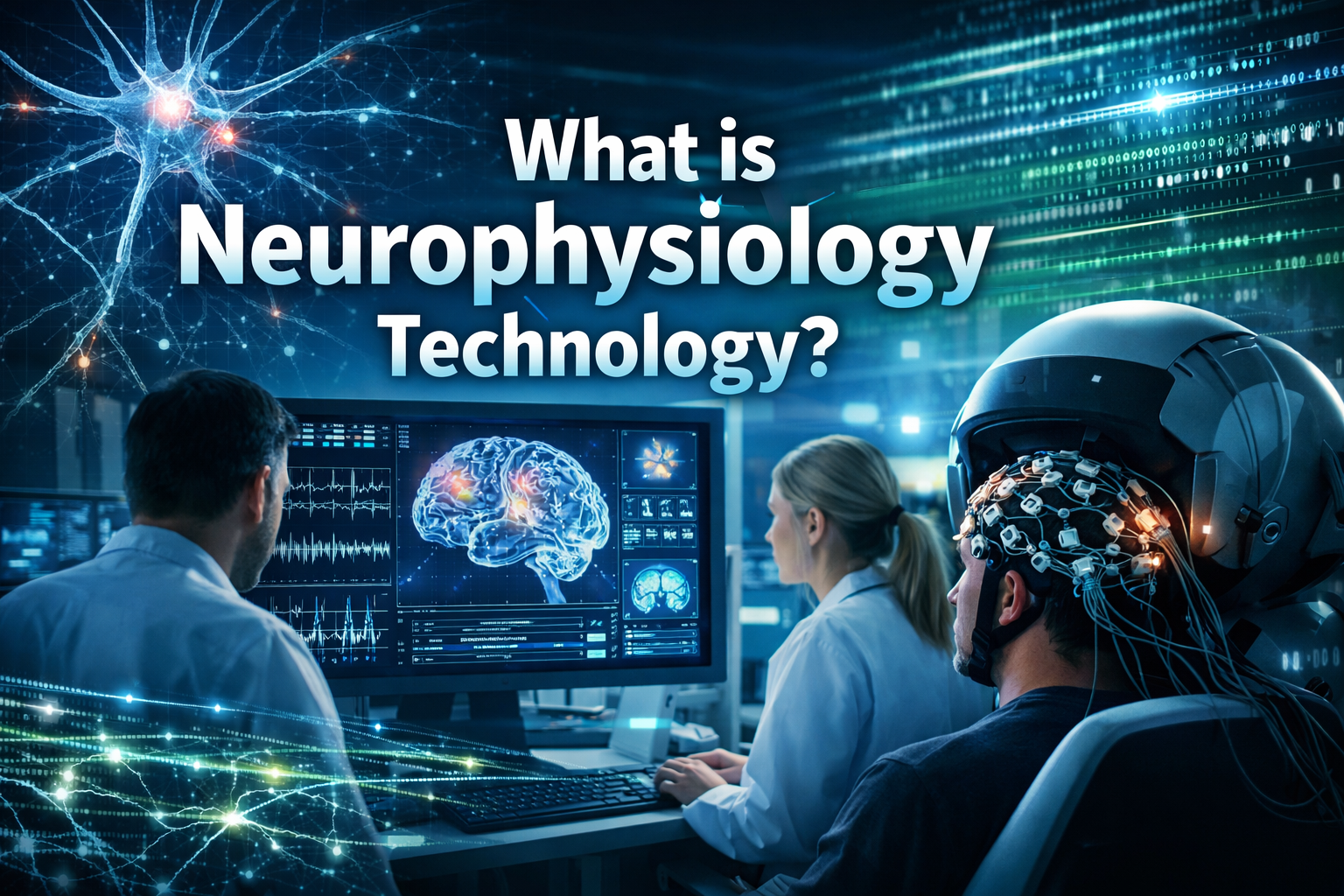
Imagine peering into the very essence of thought, movement, and sensation – the intricate electrical language of the brain and nervous system. In 2026, the field of neurophysiology technology stands at the forefront of this incredible endeavor, offering unprecedented insights into neurological health and disease. But what is neurophysiology technology, precisely? It encompasses the advanced instruments, techniques, and computational methods used to study the function of the nervous system, from individual nerve cells to complex brain networks. This vital discipline employs state-of-the-art tools to diagnose, monitor, and even treat a wide array of neurological conditions, transforming our understanding of the human body’s most complex system.
✨ Key Takeaways ✨
- 🧠 Neurophysiology technology is a specialized field utilizing advanced tools to measure and analyze the electrical activity of the nervous system.
- 🔬 It is crucial for diagnosing a broad spectrum of neurological disorders, including epilepsy, stroke, neuropathies, and multiple sclerosis.
- 🩺 Key techniques include Electroencephalography (EEG), Electromyography (EMG), Nerve Conduction Studies (NCS), and Evoked Potentials (EPs).
- �� Modern advancements in 2026 integrate AI, machine learning, and brain-computer interfaces (BCIs) to enhance diagnostic accuracy and therapeutic interventions.
- 🚀 This technology extends beyond diagnosis into surgical monitoring, research, and the development of innovative treatments for neurological conditions.
Understanding the Core Concepts: What is Neurophysiology Technology?
At its heart, neurophysiology is the study of the physiological properties of the nervous system. This involves understanding how neurons communicate, how electrical signals are generated and transmitted, and how these processes contribute to overall brain function and bodily control. When we talk about what is neurophysiology technology, we refer to the practical application of this scientific understanding through specialized instruments.
Neurophysiology Defined: The Electrical Language of Life
The nervous system, comprising the brain, spinal cord, and peripheral nerves, operates via electrochemical signals. Neurons, the fundamental units of the nervous system, communicate through action potentials – tiny electrical impulses that travel along nerve fibers. Neurophysiology technology is designed to detect, amplify, record, and interpret these minute electrical activities. Imagine trying to hear a whisper in a crowded room; these technologies act as sophisticated microphones and analysis tools, allowing specialists to “hear” the nervous system’s whispers and shouts.
“Neurophysiology technology is not just about measuring electricity; it’s about decoding the very language of life itself, revealing the intricate dance of neurons that orchestrates every thought, feeling, and movement.”
Key Diagnostic Techniques in Neurophysiology Technology
The array of technologies used in neurophysiology is diverse, each designed to capture specific aspects of neurological function. Here’s a closer look at the primary techniques that define what is neurophysiology technology in clinical and research settings in 2026:
Electroencephalography (EEG) 🧠
EEG is arguably one of the most widely recognized neurophysiology technologies. It measures the electrical activity of the brain, particularly the fluctuating voltage resulting from ionic current flows within the neurons of the brain. Electrodes placed on the scalp detect these electrical signals, which are then amplified and recorded. The resulting “brainwaves” can indicate various states of consciousness, brain disorders, and functional brain areas.
- Applications: Diagnosis of epilepsy and seizure disorders, sleep disorders, brain tumors, stroke, and encephalitis. It’s also used in brain-computer interface research.
- Procedure: Non-invasive. Small metal discs (electrodes) are attached to the scalp with a conductive paste. The patient typically relaxes while brain activity is recorded, often for 20-40 minutes, but sometimes for extended periods (ambulatory EEG or video EEG monitoring).
- Recent Advances (2026): High-density EEG with hundreds of electrodes, portable and wireless EEG devices for home monitoring, and integration with AI for automated anomaly detection.
Electromyography (EMG) and Nerve Conduction Studies (NCS) 💪
These two tests are often performed together to assess the health of muscles and the nerves that control them (peripheral nervous system). EMG measures the electrical activity of muscles at rest and during contraction, while NCS measures how fast and how well the body’s electrical signals travel along a nerve.
- Nerve Conduction Studies (NCS): Small electrical impulses are applied to nerves, and the speed (conduction velocity) and strength (amplitude) of the resulting nerve signal are measured. This helps identify nerve damage or disease.
- Electromyography (EMG): A thin needle electrode is inserted into a muscle to record its electrical activity. Healthy muscles show no electrical activity at rest, while abnormal patterns can indicate nerve damage or muscle disease.
- Applications: Diagnosis of carpal tunnel syndrome, sciatica, Guillain-Barré syndrome, ALS (Lou Gehrig’s disease), muscular dystrophy, and other neuropathies or myopathies.
- Recent Advances (2026): Miniaturized, wireless EMG/NCS devices, advanced signal processing algorithms for more precise diagnosis, and integration with real-time feedback systems for rehabilitation.
Evoked Potentials (EPs)
👂
👁
️
Related Posts:
- Is Intel Rapid Storage Technology Good Pros and Cons

- How Technology Affects Writing Tools and Their Impact

- What Is Information Technology and Examples Key Concepts

- How Educational Technology Can Help Students…

- Does AT&T Use GSM or CDMA Technology Network…
- How Fast Is Technology Moving The Pace of Modern Innovation

🗨
️
Evoked potentials measure the electrical activity in the brain and spinal cord in response to specific sensory stimuli. By presenting a stimulus (visual, auditory, or somatosensory) and averaging the brain’s electrical responses over many repetitions, background “noise” is filtered out, revealing the subtle neural pathways involved.
- Visual Evoked Potentials (VEP): Measures the electrical response in the visual cortex to visual stimuli (e.g., checkerboard patterns on a screen). Used to detect optic nerve damage, often seen in multiple sclerosis.
- Auditory Brainstem Response (ABR): Measures the electrical activity along the auditory pathway from the inner ear to the brainstem in response to clicking sounds. Used to assess hearing loss, especially in infants, and brainstem lesions.
- Somatosensory Evoked Potentials (SSEP): Measures the electrical response from the spinal cord and brain to electrical stimulation of a peripheral nerve (e.g., in the wrist or ankle). Used to assess nerve damage in the spinal cord and brain, and to monitor neurological function during surgery.
- Applications: Diagnosis of multiple sclerosis, brainstem lesions, hearing and vision problems, and spinal cord injuries.
- Recent Advances (2026): Automated interpretation systems, multi-modal EP testing for comprehensive assessment, and improved stimulus delivery methods for greater accuracy.
Intraoperative Neurophysiological Monitoring (IOM) ⚕️
IOM is a critical application of neurophysiology technology used during complex surgeries, particularly those involving the brain, spinal cord, or peripheral nerves. Its primary goal is to provide real-time feedback to surgeons about the functional integrity of neurological structures, helping to prevent iatrogenic (surgery-induced) damage.
- Techniques Used: IOM often combines multiple techniques, including EEG, EMG, NCS, and various evoked potentials (SSEPs, TcMEPs – Transcranial Motor Evoked Potentials).
- Procedure: Electrodes are strategically placed on the patient before surgery. During the procedure, a neurophysiologist or specially trained technician monitors the neural signals on a continuous basis, alerting the surgical team to any changes that might indicate nerve irritation or injury.
- Applications: Spinal fusion surgery, brain tumor removal, carotid endarterectomy, aneurysm repair, and procedures near critical nerve pathways.
- Recent Advances (2026): Wireless electrode systems, advanced visualization software that overlays neural data onto anatomical images, and predictive algorithms to anticipate potential injury.
Comparison of Key Neurophysiology Technologies
| Technology | Primary Measurement | Key Applications | Invasiveness |
|---|---|---|---|
| EEG | Brain electrical activity (brainwaves) | Epilepsy, sleep disorders, stroke | Non-invasive |
| EMG | Muscle electrical activity | Muscle diseases (myopathies), nerve root compression | Minimally invasive (needle electrode) |
| NCS | Nerve signal speed & strength | Peripheral neuropathies (e.g., carpal tunnel) | Non-invasive (surface electrodes) |
| Evoked Potentials | Brain/spinal cord response to stimuli | MS, hearing/vision problems, spinal cord lesions | Non-invasive (surface electrodes) |
| IOM | Real-time neural integrity during surgery | Spinal/brain surgery protection | Varies (surface/needle electrodes) |
Technological Advancements Shaping Neurophysiology in 2026
The field of neurophysiology technology is not static; it’s rapidly evolving with breakthroughs in engineering, computer science, and artificial intelligence. These advancements are dramatically improving diagnostic precision, expanding therapeutic possibilities, and making the technology more accessible.
Artificial Intelligence (AI) and Machine Learning (ML) 🤖
AI and ML are revolutionizing how neurophysiological data is acquired, processed, and interpreted. These technologies can analyze vast datasets of brainwaves and nerve signals, identifying patterns and anomalies that might be subtle or missed by the human eye.
- Automated Anomaly Detection: AI algorithms can quickly identify epileptic spikes, sleep stage classifications, or signs of nerve damage in real-time, assisting clinicians.
- Predictive Analytics: ML models are being developed to predict the onset of neurological conditions or patient responses to treatment based on neurophysiological markers.
- Quantitative Analysis: Beyond visual inspection, AI enables quantitative EEG (qEEG) and quantitative EMG, providing objective numerical metrics of neural function.
Brain-Computer Interfaces (BCIs) 🔗
BCIs represent a frontier where neurophysiology technology meets direct interaction with external devices. These systems allow individuals to control computers, robotic prosthetics, or communication devices using only their thoughts, by directly translating brain signals into commands.
- Therapeutic Applications: For individuals with severe paralysis, BCIs offer a pathway to communication, mobility, and independence.
- Rehabilitation: BCIs are being explored in stroke rehabilitation to help patients regain motor function by promoting neural plasticity.
- Gaming and Consumer Devices: Non-medical BCIs are emerging for hands-free control, meditation, and enhanced gaming experiences.
Advanced Neuromodulation Techniques ⚡
While often used for treatment, many neuromodulation techniques rely heavily on neurophysiology technology for precise targeting and efficacy monitoring. These involve altering nerve activity through targeted delivery of electrical or pharmaceutical agents to specific neurological sites.
- Deep Brain Stimulation (DBS): Used for Parkinson’s disease, essential tremor, and dystonia. Neurophysiology guides the precise placement of electrodes deep within the brain.
- Transcranial Magnetic Stimulation (TMS): A non-invasive technique using magnetic fields to stimulate nerve cells in the brain to improve symptoms of depression and other neurological conditions.
- Vagus Nerve Stimulation (VNS): Involves implanting a device that sends regular, mild electrical pulses to the vagus nerve, used for epilepsy and depression.
Diverse Applications of What is Neurophysiology Technology?
The impact of neurophysiology technology extends across various domains, from clinical diagnosis to cutting-edge research, significantly improving patient care and our understanding of the brain.
Clinical Diagnosis and Disease Management
�
�
The primary application of what is neurophysiology technology is the accurate diagnosis and ongoing management of neurological disorders. Early and precise diagnosis is critical for effective treatment and improved patient outcomes.
- Epilepsy: EEG remains the gold standard for identifying epileptic seizures and classifying seizure types.
- Neuromuscular Disorders: EMG and NCS are indispensable for diagnosing conditions like carpal tunnel syndrome, peripheral neuropathy, ALS, and myasthenia gravis.
- Stroke and Traumatic Brain Injury: Neurophysiological monitoring can assess the extent of damage and track recovery.
- Multiple Sclerosis: Evoked potentials can reveal demyelination in sensory pathways, aiding in diagnosis.
Surgical and Critical Care Monitoring ⚠️
As discussed with IOM, protecting the nervous system during surgery is paramount. In critical care settings, continuous EEG monitoring can detect non-convulsive seizures or assess brain function in comatose patients.
- Detecting Ischemia: Real-time changes in neurophysiological signals can alert surgeons to reduced blood flow (ischemia) to critical brain or spinal cord areas.
- Assessing Anesthetic Depth: Processed EEG can help anesthesiologists optimize anesthetic levels, particularly in complex surgeries.
- Prognosis in Coma: EEG patterns can provide valuable prognostic information for patients in a coma.
Neuroscience Research and Drug Development 🔬
Neurophysiology technology is fundamental to basic and translational neuroscience research, helping scientists unravel the mysteries of the brain.
- Brain Mapping: EEG and MEG (Magnetoencephalography, a related technology) are used to map functional brain areas, understanding how different parts of the brain contribute to cognition, emotion, and behavior.
- Drug Efficacy: Researchers use neurophysiological measures to evaluate the effects of new drugs on brain activity and nerve function.
- Understanding Neurological Processes: From studying the neural basis of learning and memory to investigating the mechanisms of psychiatric disorders, neurophysiology provides objective data.
Challenges and the Future of Neurophysiology Technology in 2026
Despite its incredible advancements, the field faces challenges that drive ongoing innovation. Looking ahead to 2026 and beyond, the trajectory of neurophysiology technology is exciting and holds immense promise.
Current Challenges 🚧
Several hurdles still need to be overcome to fully realize the potential of these technologies:
- Signal Noise and Artifacts: Electrical signals from the nervous system are tiny and susceptible to interference from muscle movements, eye blinks, or external electrical sources, requiring sophisticated noise reduction techniques.
- Data Interpretation: While AI assists, complex neurophysiological data still requires expert interpretation, and there’s a shortage of highly specialized professionals.
- Cost and Accessibility: High-end neurophysiology equipment can be expensive, limiting its availability in some regions or healthcare systems.
- Ethical Considerations: As BCIs become more advanced, ethical questions surrounding privacy, autonomy, and the definition of consciousness become increasingly relevant.
The Future Outlook of What is Neurophysiology Technology? 🚀
The future of neurophysiology technology is characterized by increasing integration, miniaturization, and personalization:
- Personalized Neurological Medicine: Tailoring treatments based on an individual’s unique neurophysiological profile.
- Non-Invasive Brain Stimulation: Further development of techniques like TMS and transcranial direct current stimulation (tDCS) for a wider range of conditions.
- Wearable Neurotech: Continuous, real-time monitoring of brain and nerve activity outside of clinical settings for early detection and lifestyle management.
- Advanced Brain-Computer Interfaces: More sophisticated and seamless BCIs for communication, control, and sensory restoration, potentially merging human and artificial intelligence.
- Neuro-Robotics and Exoskeletons: Integration of neurophysiological signals to control advanced robotic limbs and assistive exoskeletons for enhanced mobility and function.
Frequently Asked Questions About Neurophysiology Technology
- Q: Is neurophysiology technology painful?
- A: Most neurophysiology technologies are non-invasive or minimally invasive. For example, EEG and evoked potentials involve electrodes on the skin and are generally painless. EMG involves small needle electrodes inserted into muscles, which can cause some discomfort, but it is typically well-tolerated.
- Q: How long does a typical neurophysiology test take?
- A: The duration varies greatly depending on the specific test. A standard EEG might take 20-40 minutes, while an EMG/NCS study could take 30-90 minutes. Long-term monitoring, like ambulatory EEG, can last for days.
- Q: Can neurophysiology technology detect all neurological problems?
- A: While incredibly powerful, neurophysiology technology provides functional information about the nervous system’s electrical activity. It is often used in conjunction with structural imaging (like MRI or CT scans) and clinical evaluations for a comprehensive diagnosis. It’s excellent for electrical disorders (e.g., epilepsy) and nerve/muscle conditions but may not detect all types of brain lesions or chemical imbalances directly.
- Q: What qualifications do professionals working with neurophysiology technology need?
- A: Neurophysiology technologists typically require specialized training and certification, often an associate’s or bachelor’s degree in neurophysiology or a related health science field. Physicians specializing in interpreting these tests are usually neurologists or clinical neurophysiologists who have completed additional fellowship training.
- Q: How will neurophysiology technology impact healthcare in 2026?
- A: In 2026, neurophysiology technology is already making healthcare more precise and personalized. It allows for earlier detection of diseases, more accurate monitoring during surgery, and the development of innovative therapies like BCIs. It’s moving towards more integrated, AI-driven diagnostics and accessible wearable devices for continuous monitoring, significantly enhancing neurological care.
How To Prepare for a Neurophysiology Test
Preparing for a neurophysiology test helps ensure accurate results and a smooth experience. While specific instructions will come from your healthcare provider, here are general steps for common tests like EEG or NCS:
- Consult Your Doctor: Always follow the specific instructions given by your physician or the neurophysiology lab. They will advise on diet, medications, and any other unique preparations.
- Wash Your Hair: For tests involving scalp electrodes (like EEG), wash your hair the night before or the morning of the test. Avoid using conditioners, hair sprays, gels, or oils, as these can interfere with electrode adhesion.
- Review Medications: Discuss all medications (prescription and over-the-counter) and supplements you are taking with your doctor. They may advise you to stop certain medications temporarily, especially those affecting brain activity.
- Eat Regularly (Unless Advised Otherwise): For most tests, it’s fine to eat as usual. However, for certain EEG studies (e.g., sleep deprivation EEG), specific dietary instructions might be given.
- Get Adequate Sleep (Unless Advised Otherwise): For a standard EEG, being rested is fine. However, some EEGs specifically require sleep deprivation to increase the likelihood of recording abnormal brain activity, so follow instructions carefully.
- Wear Comfortable Clothing: Wear loose, comfortable clothing to allow easy access for electrode placement if necessary. Avoid tight-fitting clothes, especially around the neck, arms, and legs.
- Ask Questions: If you have any concerns or questions about the procedure, don’t hesitate to ask your doctor or the technologist before the test begins.
Defined Terms in Neurophysiology Technology
- Action Potential
- A brief electrical charge that travels down an axon. The fundamental unit of information transmission in the nervous system.
- Artifact
- An unwanted signal or interference that appears in a neurophysiological recording, not originating from the actual brain or nerve activity being measured (e.g., muscle movement, eye blink, electrical noise).
- Demyelination
- The process of damage to the myelin sheath, the fatty protective covering around nerve fibers, which impairs the speed and efficiency of nerve signal transmission. Often seen in conditions like multiple sclerosis.
- Neuron
- The fundamental cellular unit of the nervous system responsible for transmitting electrical and chemical signals. Also known as a nerve cell.
- Neuropathy
- A general term for disease or dysfunction of one or more peripheral nerves, typically causing numbness, tingling, muscle weakness, and pain in the affected area.
- Neuroplasticity
- The brain’s ability to reorganize itself by forming new neural connections throughout life, adapting to new experiences, learning, or injury.
Conclusion: The Enduring Impact of What is Neurophysiology Technology?
The journey into understanding the nervous system is one of humanity’s most profound scientific quests. Neurophysiology technology, in 2026, serves as our primary compass and telescope, allowing us to navigate its complexities. From diagnosing debilitating neurological disorders with precision to monitoring the delicate dance of neurons during surgery, and even pioneering mind-controlled devices, its impact is undeniable and ever-growing. This field is continuously evolving, driven by innovation in AI, miniaturization, and our insatiable curiosity about the brain. For patients, it offers hope for earlier diagnosis and more effective treatments; for clinicians, invaluable diagnostic and monitoring tools; and for researchers, the keys to unlocking the deepest secrets of consciousness and control.
As we look to the future, the integration of neurophysiology technology with other disciplines, coupled with ethical considerations, will continue to shape how we understand, protect, and enhance the most vital system of the human body. The question of what is neurophysiology technology will only grow in breadth and depth, signifying a future where neurological health is better understood, managed, and optimized for all.
References
- Gomori, J. M., & Steiner, I. (2020). Clinical Neurophysiology. In Neurology and Clinical Neuroscience (pp. 115-131). Springer.
- Chatrian, G. E., Bergamini, L., Dondey, M., Klass, D. W., Lennox-Buchthal, M., & Petersén, F. (1987). A glossary of terms most commonly used by clinical electroencephalographers and an update of the IFCN-approved glossary. Electroencephalography and Clinical Neurophysiology, 66(5), 450-457.
- American Association of Neuromuscular & Electrodiagnostic Medicine (AANEM). (2023). EMG/NCS Patient Information. Retrieved from www.aanem.org.
- Nunez, P. L., & Srinivasan, R. (2006). Electric Fields of the Brain: The Neurophysics of EEG (2nd ed.). Oxford University Press.
- Fisher, R. S., Acevedo, C., Arzimanoglou, A., Bogacz, A., Cross, J. H., Engel, J., … & Zuberi, S. M. (2014). ILAE official report: a practical clinical definition of epilepsy. Epilepsia, 55(4), 475-482.
- Liu, Y., Tian, X., & Liu, Y. (2022). Artificial intelligence in clinical neurophysiology: Current status and future trends. Clinical Neurophysiology, 134, 153-162.
 Sally Miles